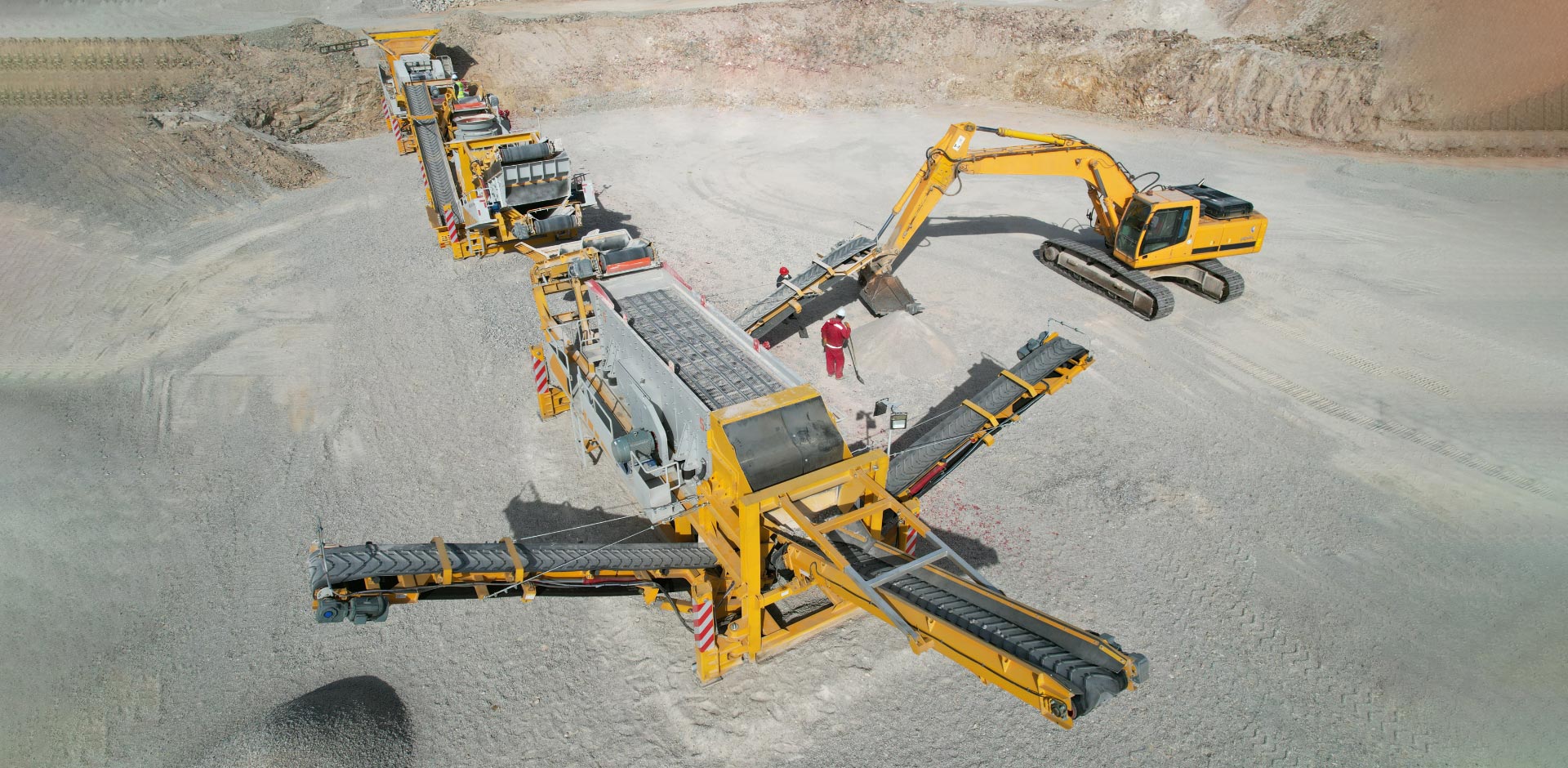
Track crushers, including mobile jaw crusher machine and mobile impact crusher plant, are widely used in construction, mining, and road construction projects due to their strong mobility, flexibility, and adaptability to complex terrain. The track chassis is the core component that enables these mobile crusher plants for sale to move freely, bear the weight of the entire equipment, and ensure stable operation on uneven or soft ground. Installing the track chassis correctly is crucial for the safety, stability, and service life of mobile jaw crusher machine and mobile impact crusher plant. Improper installation can lead to chassis deformation, track deviation, equipment vibration, or even serious safety accidents during operation. This article details the step-by-step installation process, key technical requirements, and safety precautions for installing track chassis for both mobile jaw crusher machine and mobile impact crusher plant, helping operators complete the installation efficiently and safely.
Pre-Installation Preparation: Lay a Solid Foundation for Chassis Installation
Adequate pre-installation preparation is essential before installing the track chassis for mobile jaw crusher machine and mobile impact crusher plant, as it can avoid installation delays, component damage, and safety hazards. This stage mainly includes site preparation, component inspection, and tool preparation, which are closely related to the installation quality and subsequent operation of track crushers.
First, prepare the installation site. The site should be flat, solid, and have sufficient bearing capacity to support the weight of the mobile crusher plant (including the track chassis, crusher host, motor, and other components). For soft or uneven ground, it is necessary to level and compact the ground first, or lay steel plates or sleepers to enhance the bearing capacity, preventing the equipment from sinking or tilting during installation. The site should also be spacious enough to facilitate the lifting and positioning of the track chassis and the host equipment, and clear obstacles around the site to ensure the safety of the installation personnel and the smooth progress of the operation. In addition, ensure the site has a stable power supply and lighting facilities, which are necessary for the installation of electrical components and hydraulic systems of the track chassis.
Second, inspect all components of the track chassis and the mobile crusher plant. Before installation, unpack and check the track chassis (including track shoes, rollers, idlers, drive wheels, hydraulic motors, and frame), as well as the mobile jaw crusher machine or mobile impact crusher plant host. Check whether there is collision damage, deformation, or missing parts during transportation. For example, check if the track shoes are cracked, the rollers and idlers are worn, and the hydraulic pipes are damaged or leaking. For the mobile crusher plant for sale, check the connection base of the host and the track chassis to ensure the bolt holes are aligned and the base is flat. If any abnormal conditions are found, contact the supplier in time to repair or replace the defective components to avoid affecting the installation quality.
Finally, prepare the necessary tools and auxiliary equipment. The installation of the track chassis requires professional tools such as cranes, hoists, torque wrenches, levels, measuring tapes, and hydraulic jacks. Ensure the crane has sufficient load-bearing capacity to lift the track chassis and the mobile crusher host safely. Prepare high-strength bolts, nuts, washers, lubricating oil, and hydraulic oil that meet the manufacturer’s specifications, as well as auxiliary materials such as gaskets and sealants. In addition, arrange professional installers who are familiar with the structure of track crushers and have rich installation experience, and conduct safety training for them to clarify the installation procedures and safety rules.
Key Differences in Track Chassis Installation Between Mobile Jaw Crusher Machine and Mobile Impact Crusher Plant
Although the installation process of the track chassis for mobile jaw crusher machine and mobile impact crusher plant is generally similar, there are some key differences due to the different structures and weights of the two types of mobile crusher plants. Understanding these differences is crucial to ensuring the installation is accurate and suitable for the equipment’s working characteristics.
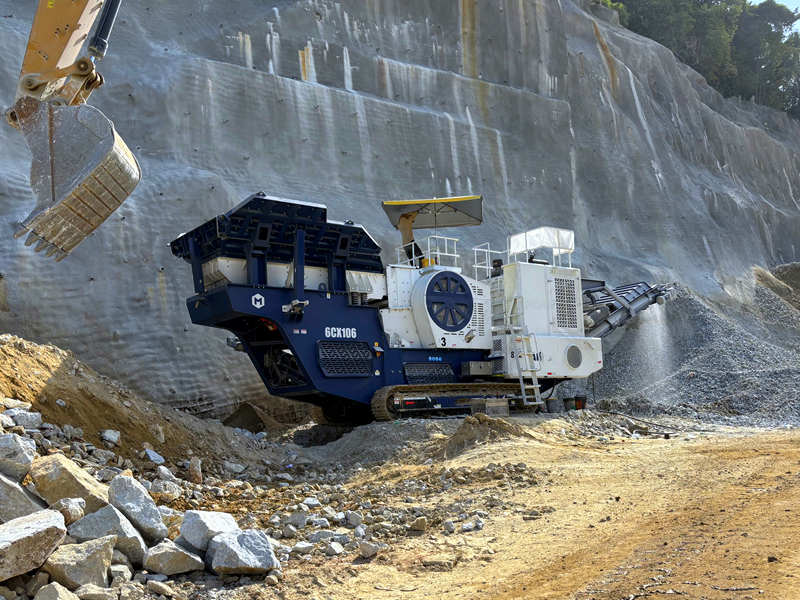
The mobile jaw crusher machine is mainly used for primary crushing of raw materials, with a relatively simple structure and a heavier host weight (usually 10-50 tons). Therefore, when installing the track chassis for the mobile jaw crusher machine, the focus is on ensuring the bearing capacity and stability of the chassis. The track chassis for mobile jaw crusher machine is usually designed with a thicker frame and more robust rollers and idlers to bear the impact force generated during jaw crushing. During installation, it is necessary to ensure that the connection between the host and the chassis is firm, and the center of gravity of the host is aligned with the center of the track chassis to avoid uneven force and chassis deformation.
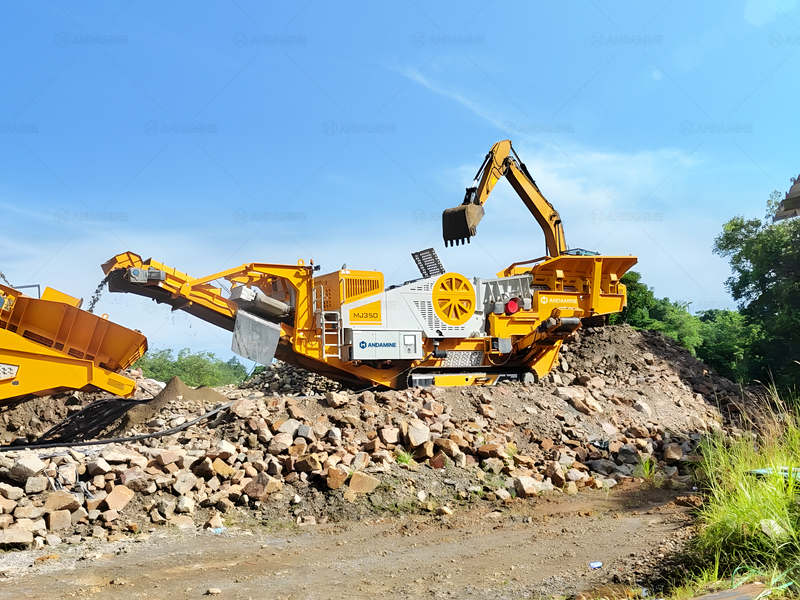
In contrast, the mobile impact crusher plant is used for secondary or tertiary crushing and shaping, with a more complex structure (including impact crusher host, vibrating screen, and conveyor) and a relatively balanced weight distribution. The track chassis for mobile impact crusher plant is designed to be more flexible, with better mobility to adapt to frequent movement between different construction sites. During installation, special attention should be paid to the alignment of the conveyor, vibrating screen, and the track chassis to ensure smooth material transportation and avoid vibration caused by misalignment. In addition, the mobile impact crusher plant’s track chassis is often equipped with a more advanced hydraulic steering system, so the installation of hydraulic pipelines and control components needs to be more precise to ensure flexible steering and stable operation.
Regardless of whether it is a mobile jaw crusher machine or a mobile impact crusher plant, the track chassis must be compatible with the equipment model. When purchasing a mobile crusher plant for sale, it is necessary to confirm that the track chassis matches the host model to avoid installation difficulties or safety hazards caused by mismatched components.
Step-by-Step Installation Process of Track Chassis
The installation of the track chassis for mobile jaw crusher machine and mobile impact crusher plant follows a standardized process, including chassis positioning, host connection, track adjustment, hydraulic and electrical system installation, and post-installation inspection. Each step must be operated strictly in accordance with the manufacturer’s instructions to ensure installation quality.
Track Chassis Positioning and Leveling
First, use a crane to lift the track chassis to the pre-prepared installation site, and place it on the flat and solid ground. Use a level to adjust the levelness of the track chassis, ensuring that the horizontal error is within the allowable range of the manufacturer (usually no more than 2mm/m). If the chassis is tilted, use hydraulic jacks to adjust the height of the track shoes, and pad shims under the chassis if necessary to ensure the chassis is stable and horizontal. After leveling, fix the track chassis temporarily with anchors to prevent it from moving during the subsequent host installation.
Connect the Mobile Crusher Host to the Track Chassis
Lift the mobile jaw crusher machine or mobile impact crusher plant host with a crane, and align the connection base of the host with the bolt holes on the track chassis. Slowly lower the host to the track chassis, ensuring that the bolt holes are completely aligned. Insert high-strength bolts through the holes, and install washers and nuts. Use a torque wrench to tighten the bolts according to the manufacturer’s specified torque (usually 400-600 N·m, depending on the equipment model), ensuring that each bolt is tightened evenly to avoid uneven force. After tightening, check the connection between the host and the chassis to confirm there is no gap or looseness. For the mobile impact crusher plant, it is also necessary to connect the vibrating screen and conveyor to the track chassis at the same time, ensuring their positions are aligned with the host’s discharge port and feeding port.
Track Installation and Adjustment
After connecting the host to the track chassis, install the track shoes on the chassis. The track shoes are usually connected to the track chain with pins; insert the pins into the holes of the track chain and track shoes, and fix them with cotter pins to prevent them from falling out. After installing the track shoes, adjust the tension of the track. The track tension is too loose, which will cause track deviation during operation; too tight will increase the wear of the rollers and idlers. Use the hydraulic tensioning device on the track chassis to adjust the tension: inject hydraulic oil into the tensioning cylinder to tighten the track, or release hydraulic oil to loosen the track, until the track tension meets the manufacturer’s requirements. After adjustment, lock the tensioning device to avoid tension changes during operation.
In addition, check the alignment of the track. The track should be parallel to the track chassis frame, and there should be no deviation. If the track is deviated, adjust the position of the idlers or drive wheels to correct the deviation. Ensure that the rollers and idlers are in good contact with the track, and there is no jamming or uneven wear.
Installation of Hydraulic and Electrical Systems
The track chassis of mobile jaw crusher machine and mobile impact crusher plant is driven by a hydraulic system, and the operation is controlled by an electrical system. After completing the mechanical installation, connect the hydraulic and electrical systems.
For the hydraulic system, connect the hydraulic pipes from the hydraulic motor, tensioning cylinder, and steering cylinder to the hydraulic pump and control valve of the mobile crusher plant. Ensure the pipe connections are tight, and install gaskets to prevent hydraulic oil leakage. After connecting the hydraulic pipes, add the specified type of hydraulic oil to the hydraulic tank, and check the oil level to ensure it meets the requirements. Start the hydraulic system, run it at low pressure, and check for oil leaks. If there is any leakage, tighten the pipe connectors or replace the gaskets immediately.
For the electrical system, connect the wires from the hydraulic motor, control panel, and sensors to the main power supply. The wiring must be carried out by a professional electrician according to the electrical schematic diagram. Ensure the electrical connections are tight, and install leakage protection and overcurrent protection devices to ensure safe operation. Test the electrical control system: operate the control panel to control the track chassis’s forward, backward, and steering movements, ensuring each function works normally.
Post-Installation Inspection and Test Run
After completing the installation of the track chassis, a comprehensive post-installation inspection and test run are necessary to ensure the installation is correct and the equipment can operate safely and stably. This is the last safety barrier before the mobile crusher plant is put into formal operation.
First, conduct a comprehensive mechanical inspection. Check all fasteners (bolts, nuts, pins) to confirm they are tightened to the specified torque. Check the track tension, alignment, and wear of track shoes, rollers, and idlers. Check the hydraulic system for oil leaks, and the electrical system for loose connections or short circuits. Check the connection between the host and the track chassis, and ensure the protective covers, guardrails, and warning signs are installed in place.
Then, conduct an empty test run. Start the mobile crusher plant (mobile jaw crusher machine or mobile impact crusher plant), and let the track chassis move forward, backward, and turn at a slow speed. During the test run, observe whether the track chassis operates smoothly, whether there is abnormal noise, vibration, or track deviation. Check the temperature of the hydraulic motor and bearings, and confirm that the hydraulic and electrical systems work normally. If any abnormal conditions are found, stop the machine immediately for inspection and adjustment.
Finally, conduct a load test run. After the empty test run is qualified, start the crusher host and carry out a load test. Let the mobile crusher plant operate under normal working load, and observe the track chassis’s stability and bearing capacity. Check whether the track is stable, whether there is any deformation of the chassis, and whether the hydraulic and electrical systems work normally. Only after the load test run is successful can the mobile crusher plant be put into formal operation.
Safety Precautions for Track Chassis Installation
When installing the track chassis for mobile jaw crusher machine and mobile impact crusher plant, operators must strictly abide by the following safety precautions to avoid accidents and ensure personal and equipment safety.
First, all installers must wear personal protective equipment, including safety helmets, safety shoes, gloves, and safety ropes (when working at high altitude). It is strictly prohibited to stand under suspended heavy objects during the lifting process of the track chassis and host equipment. The crane operator must have a professional license and operate the crane in accordance with safety regulations.
Second, before starting the hydraulic or electrical system, ensure that all components are installed correctly, and there are no personnel around the moving parts. It is strictly prohibited to start the equipment without authorization during installation. If any abnormal conditions are found, stop the operation immediately, cut off the power supply, and check the cause.
Third, do not overload the crane during lifting. The lifting capacity of the crane must be greater than the weight of the lifted component to avoid crane overload and accidents. Use qualified lifting tools (such as slings, hooks) to ensure the lifted component is fixed firmly.
Fourth, during the installation process, strictly follow the manufacturer’s installation instructions and technical parameters. Do not modify the installation method or component specifications without authorization, which may lead to equipment damage or safety hazards. For unclear installation steps, consult the manufacturer’s technical personnel in time.
In conclusion, installing the track chassis for mobile jaw crusher machine and mobile impact crusher plant is a systematic and rigorous process that requires adequate pre-preparation, precise operation, and comprehensive inspection. By understanding the key differences between the two types of track crushers, following the standardized installation steps, and abiding by safety precautions, operators can complete the installation efficiently and safely. A correctly installed track chassis can ensure the mobile crusher plant for sale operates stably, moves flexibly, and has a long service life, providing strong support for various construction and mining projects.